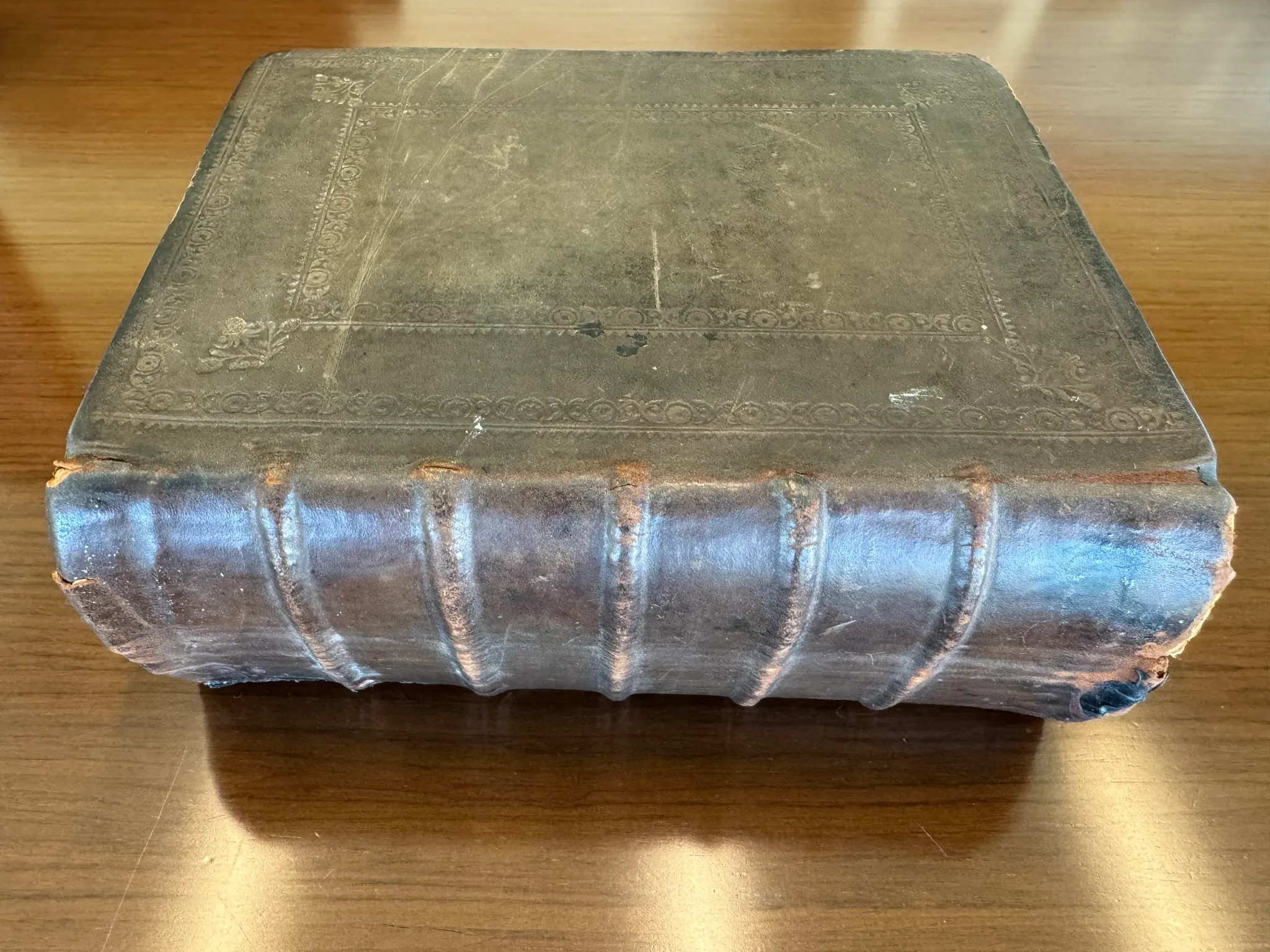
The Gutenberg Bible (c. 1454–1455)
This Gutenberg Bible facsimile represents a turning point in human history. Printed in Mainz, Germany, by Johannes Gutenberg, it was the first major book ever produced using movable metal type. For the first time, the Bible could be copied accurately and consistently—page after page—without being written by hand.
The text is the Latin Bible used by the medieval church, but what makes this volume remarkable is how old and new meet on every page. The printed letters were designed to look like beautiful handwritten script, and many original copies were later finished by artists who added colorful initials and decorative touches by hand. Each Bible took months to produce and required printers, artists, and binders working together.
The Gutenberg Bible changed the world not because it was flashy, but because it made God’s Word durable, repeatable, and sharable. It opened the door for learning, translation, and reform, and it laid the foundation for the spread of Scripture to ordinary people across generations. This book reminds us that long before screens and digital media, God used ink, paper, and a printing press to carry His Word into the future.


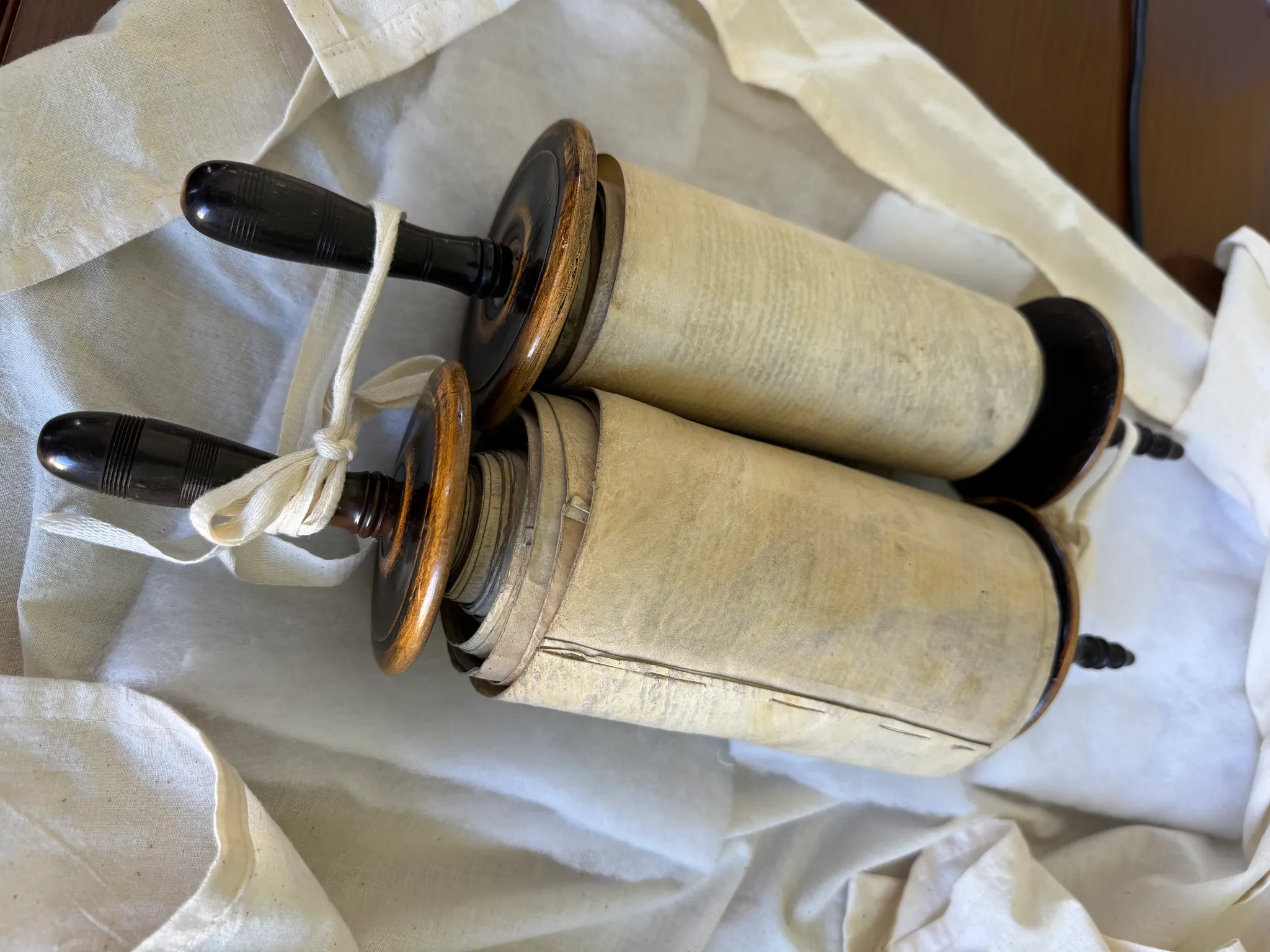
Small Torah Scroll — Poland, late 19th century:
This miniature Torah scroll was hand-scribed by a Jewish sofer (scribe) in a Polish scriptorium in the late 1800s. Measuring only about 1.25 feet wide, it contains the Hebrew text of the Pentateuch—Genesis through Deuteronomy—written with quill and ink on parchment according to ancient ritual law.
Its small size suggests it was made for personal devotion, teaching, or travel, not for synagogue reading. Each letter was meticulously shaped in Ashkenazi Hebrew script, following traditions that date back over two thousand years.
Produced in one of Europe’s most vibrant centers of Jewish learning before World War II, this scroll reflects the deep reverence and artistry surrounding the Torah: the sacred “Law of Moses,” regarded as the living Word of God in Jewish faith and worship.
The 1612 King James Bible with 1617 “Book of Psalmes”:
This 1612 Authorized Version, printed in London by Robert Barker, the King’s Printer, is one of the earliest portable editions of the King James Bible. Issued only a year after the grand 1611 folio, this smaller quarto format brought Scripture from the church lectern to the family table.
Barker’s edition includes the Epistle Dedicatory to King James I, the Translators’ Preface, the complete Old and New Testaments with the Apocrypha, and study aids such as maps, genealogies, and tables. Bound at the back is a separately printed 1617 Whole Booke of Psalmes by Thomas Sternhold and John Hopkins, the metrical psalter sung in Anglican worship.
Together, Bible and Psalmes formed a complete devotional companion—Scripture to be read, studied, and sung. This volume reflects the spiritual rhythm of early seventeenth-century English life, where faith, learning, and music met in one beautifully printed book.